SARS-CoV-2 Pseudovirus, D614G variant
Comprehensive Neutralization Assay Solutions for Advancing COVID-19 Research
D614G Pseudovirus Advantages
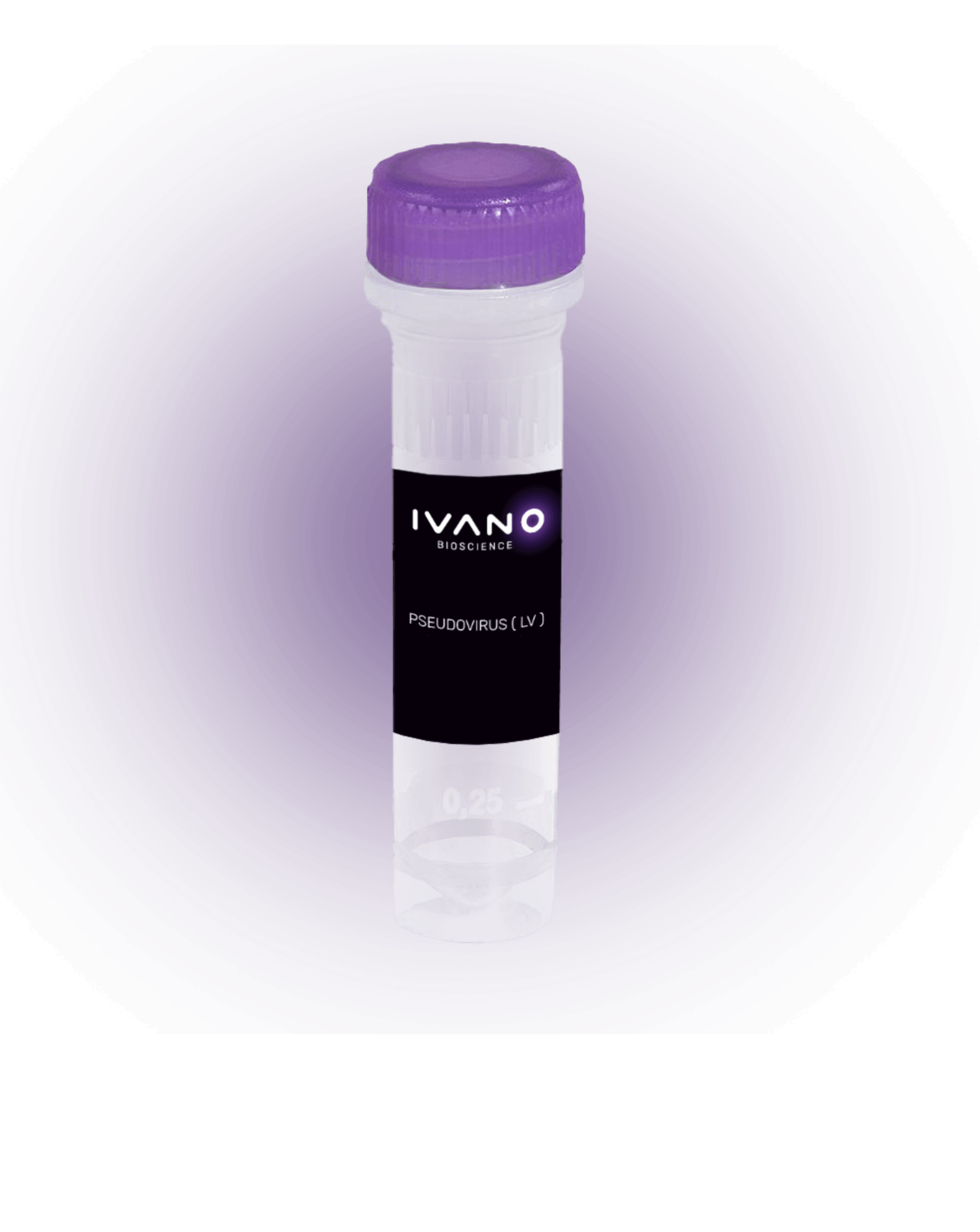
We produce a pseudovirus pseudotyped with the Spike Glycoprotein of SARS-CoV-2 virus D614G variant, also known as Wuhan-Hu-1 variant (GenBank: MN908947). These pseudoviruses carry a modified genome that expresses a luciferase or a GFP reporter gene.
Up to 1,000 reactions per mL (96-well plate)
Get a signal-to-background ratio of ≥103 with 1 µL per well
Infectious titer of at least 105 RLU/µL
The transduction efficiency is evaluated using HEK293 ACE2+ cells.
Lot to lot functionally validated
Infectivity and neutralization are evaluated for each batch
Lead Time: 2 - 3 week
We provide you with freshly produced pseudoviruses
Features
Enable specific detection
Expression of Spike glycoprotein as the sole surface antigen
Enhanced safety
Our pseudoviruses use a 3rd-generation lentivirus core and must be handled in BSL-2 conditions
Characterization of thermal stability
Stable at least 6 month at -80 °C
Support high-throughput screening
Applications
Pseudoviruses provide a safe and versatile platform for SARS-CoV-2 virus research and the development of therapeutic countermeasures. SARS-CoV-2 pseudoviruses have several important applications in research and development, including:
Vaccine Development
Neutralizing Monoclonal Antibody Screening
Antiviral Resistance Studies
Fundamental Research on Viral Entry
Treatment Efficacy Testing

SARS-CoV-2 Wuhan-Hu-1 Background
The SARS-CoV-2 D614G variant refers to an early and globally dominant form of the virus that carries a point mutation in the spike (S) glycoprotein, in which aspartic acid (D) at position 614 is replaced by glycine (G). This mutation first emerged within the Wuhan-Hu-1 genetic background during the early months of the COVID-19 pandemic and rapidly became the predominant form worldwide, effectively supplanting the ancestral spike sequence in circulating viruses by mid-2020(Korber et al, 2020).
Functionally, the D614G substitution has been associated with increased infectivity and transmission, likely due to structural alterations in the spike protein that favor a conformation more competent for receptor interaction and efficient viral entry, resulting in higher viral loads in infected individuals and enhanced spread at the population level (Yurkovetskiy et al, 2020).
The D614G change has served as a baseline genetic background for subsequent variants of concern that continued to evolve during the pandemic(INSPQ, 2021).

SARS-CoV-1 pseudovirus in Publications
The global impact of COVID-19, caused by the original SARS-CoV-2 strain Wuhan-Hu-1, has highlighted the critical need for effective vaccines and antiviral strategies. By eliminating the need to handle infectious BSL-3 virus, pseudovirus neutralization assays offer a safe, rapid, scalable, and standardized platform for evaluating neutralizing monoclonal antibodies (mAbs) and antiviral compounds targeting the spike (S) protein of SARS-CoV-2.
D614G Spike Mutation Increases SARS CoV-2 Susceptibility to Neutralization
Calibration of two validated SARS-CoV-2 pseudovirus neutralization assays for COVID-19 vaccine evaluation
Documentation

Quality Control Reports

SDS